

A $40 billion dollar Google investment for AI data centers in Armstrong and Haskell counties south of Dallas signals an emerging tech shift. Once concentrated in coastal towns in California and Virginia, AI data centers have now begun to grow across suburban and rural North Texas, posing the region as an unlikely counterpart of Silicon Valley.
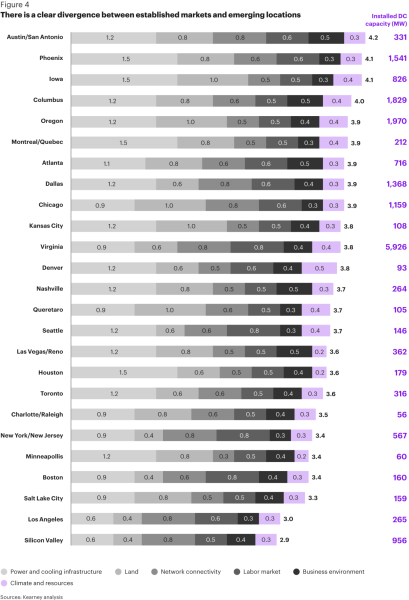
For a successful data center, computer servers, adequate storage and cooling systems are a must, requiring substantial amounts of power, land and other resources like water.
Although the Austin and San Antonio regions are the most popular locations in the state, Dallas has been steadily climbing the ranks in terms of attractiveness towards AI data companies. In Collin county alone, six warehouses in Plano and one warehouse in Allen reside.
“Dallas remains competitive due to its robust fiber network, strategic location, and Texas’s independent power grid advantages,” global management consulting firm Kearney states. “However, rising land costs could pose challenges for future scalability.”
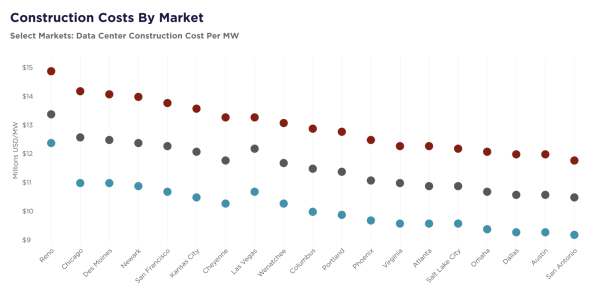
Construction costs for data centers in Dallas are one of the lowest, third to only San Antonio and Austin, making the issue of land costs nuanced.
“While the weighted average cost of data center land has decreased to $5.59 per square foot in 2024, prices for parcels 50 acres or larger have surged by 23% from 2023.” real estate service firm Cushman and Wakefield states.
Dallas’ popularity stems from its power accessibility among the growing power challenges in currently established markets.
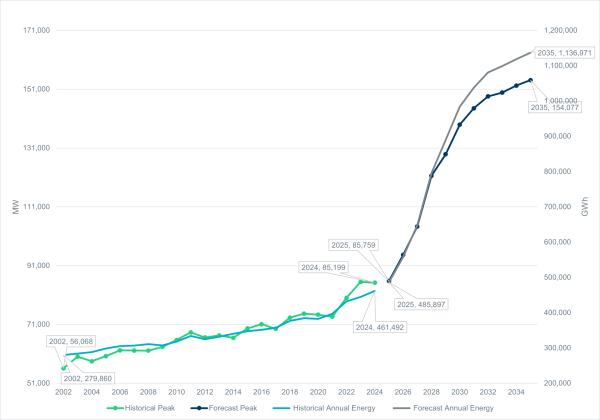
The Electric Reliability Council of Texas load forecasts depict a rise from 526,000 mWh in 2025 to 1,775,000 mWh in 2035, posing a significant change for the data center market.
“The project will make Texas the largest state for AI data infrastructure, but experts warn it could strain the power grid.” KDFW Fox 4 reporter Steven Dial said.
Whether the increased need for power presents a depletion of power or a replenishment of new technology and investments in the area, only one thing is certain— while the Dallas market has been well established for nearly two decades, its reemergence will continue to challenge other markets.








![A digitally constructed image shows money flowing out of a U.S. government building, representing the economic impact of the Trump administration’s new tariff policy. “[The tariffs are] supposed to basically pump up American businesses to where Americans go buy American products,” U.S. government teacher Adam Barclay said. “Then you have more manufacturing, you have more jobs, and that's how it's supposed to work.”](https://rockhillmedia.org/wp-content/uploads/2025/04/Impact-of-the-U.S.-Tariffs-1-1200x675.png)